
Museum Data Service provides a route for museums to share collections data to support a better-connected sector, and enhanced opportunities for people to undertake object-based research. However, museum object data is just one part of the puzzle that makes up a larger cultural heritage dataspace. Archaeology, archives, libraries and heritage sciences like conservation all help build a better picture of our past.
In this blog post, we’re sharing more about the Heritage Science Data Service (HSDS). The HSDS is part of the Archaeology Data Service and a huge investment as part of the RICHeS programme. HSDS will provide core digital research services aiming to unlock potential for innovation in heritage science and conservation research and its capacity to understand, preserve, manage, and engage with UK heritage. Read on to learn about a funding opportunity to link museum and heritage science data through the MDS and HSDS.
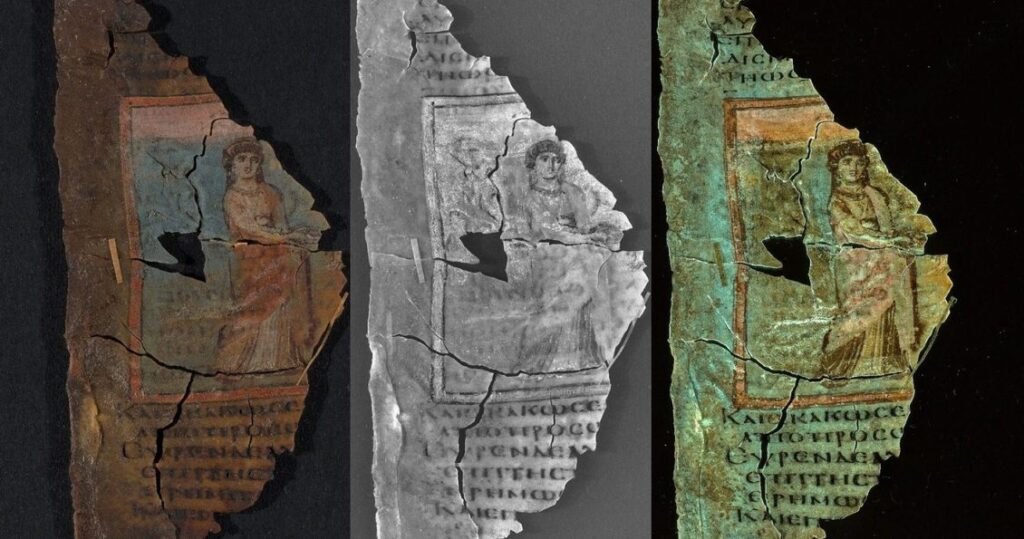
So, what is Heritage Science? It’s a bridge between science and technology and the wider cultural heritage sector. Heritage Science is the practice of using scientific tools and techniques to learn more about our heritage, protect it for future generations and share more informative and engaging stories with our audiences. Heritage science and conservation research has significant digital infrastructure requirements. These fields employ a broad range of technologies including digital imaging (3D laser scanning, X-ray, infrared, XRF scanning etc), remote sensing (LiDAR, geophysics), 3D modelling, dating (dendrochronology, C14) and many others. Many of these complementary methods are used in tandem, generating numerous datasets at large scales that require active data management to ensure long-term preservation and re-use. These datasets are primary resources, generally born-digital, which cannot be reacquired. It is therefore essential they are managed and curated according to the FAIR data principles.
Since October 2024 HSDS have established the following services to empower arts and humanities professionals, heritage and conservation experts and scientists:
- An accredited and FAIR digital repository that preserves and provides access to critical heritage science data, including provision for data from RICHeS collections and facilities investments and RICHeS Access Fund awardees.
- The HSDS Catalogue of Services; an easy-to-use resource allowing users to discover and access heritage science and conservation collections and facilities that are essential to their research.
- The HSDS Data Catalogue; a centralised resource to collate heritage science and conservation data collections from across the UK, making datasets findable and accessible for all users.
- A collaboration with STFC Hartree Centre to develop a suite of Virtual Research Environments (VREs) and software tools to allow researchers to access, visualise and analyse large-scale heritage science and conservation datasets.
- The HSDS Grants Programme, providing funding to enhance access to heritage science and conservation resources and develop tailored VRE applications and workflows with STFC’s Hartree Centre.
Many of the museum object records on MDS already have some basic conservation information recorded in them. We’re excited about the potential to be able to link the core object records in MDS with the rich heritage science and conservation data and assets in the HSDS – do let us know if you are thinking of any projects that might link MDS and HSDS data.
Round 2 of the HDSD Grants Programme is now open – closing date 30 September 2026. Grants are available up to £25,000 to either generate heritage science datasets, or work with the team at STFC’s Hartree Centre to develop Virtual Research Environments. Full details of the programme are available on their website, and the HSDS team are happy to take questions at applications@hsds.ac.uk.